carlo vidua egyptian museum.
Carlo Vidua and the Origins of the Egyptian Museum in Turin.
A key figure in the foundation of the Egyptian Museum in Turin is Carlo Vidua. Whose efforts were crucial in acquiring the first and most significant part of the museum’s ancient Egyptian collection. His contribution reflects both his deep cultural knowledge and his passion for travel. Combined with a strong love for his homeland and a desire to elevate its prestige.
The origins of the Egyptian collection in Turin are often credited to Bernardino Drovetti and King Carlo Felice of Savoy. Overlooking the pivotal role played by Carlo Vidua of Casale Monferrato, who acted as a bridge between the two.
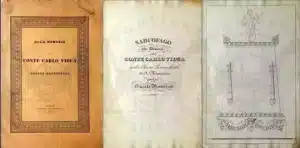
Who Was Carlo Vidua? carlo vidua egyptian museum.
Carlo Vidua, Count of Conzano, was an educated, curious traveler and a bold explorer. His journeys, which started with nearby destinations, soon extended across Europe, and later to Russia, Egypt, the United States, South America, China, and Indonesia.
In autumn 1819, Vidua arrived in Constantinople. The starting point of a long journey that took him through Smyrna, Rhodes, and eventually to Egypt, where he remained for over a year. He departed from Egypt on August 12, 1820, heading toward the Holy Land and the Greek islands, and only returned to Italy in 1822.
Carlo Vidua in Egypt.
Vidua landed in Alexandria on December 27, 1819, and by January 6, he had reached Cairo. There, he combined the curiosity of a tourist with the precision of a scholar. He took notes, copied inscriptions, and created detailed drawings of temples, monuments, and buildings. He visited numerous Egyptian cities, saw the pyramids, and sailed the Nile, braving intense heat and the challenges of the desert.
While in Cairo, he met Bernardino Drovetti, a fellow Piedmontese, a former supporter of Napoleon, and the French Consul General in Cairo.
Bernardino Drovetti and His Collection carlo vidua egyptian museum.
Drovetti was among the first major collectors of Egyptian antiquities. Since 1811, he had been amassing a significant and valuable collection. Which he had unsuccessfully offered to both the Savoy state and the Kingdom of France as early as 1816.
Vidua, a guest in Drovetti’s home in Cairo, quickly grasped the immense value of the collection. This encounter sparked his determination to secure the collection for Turin. Which would become the first city in Europe to own and display such an important Egyptian collection.
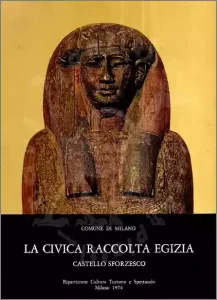
Vidua’s Diplomatic Role in Creating the Egyptian Museum.
Vidua acted as a negotiator and mediator. He managed to negotiate the price of the collection with Drovetti. And, at the same time, launched a persistent letter-writing campaign to advocate for the acquisition. His letters were addressed to his father—then Minister of the Interior—and to his childhood friends. Now influential figures at court and in government. c
Thanks to Carlo Vidua’s strategic efforts, the dream of bringing Drovetti’s collection to Turin became a reality. His role was not secondary but central to the birth of what would become one of the world’s most important Egyptian museums.
Dining in the Middle Ages: Flavors, Recipes, and Culinary Manuscripts.