
Exploration of Tibet by Giuseppe Tucci
Exploration of Tibet by Giuseppe Tucci, article published in I Giorni della Creazione, Radio Italiana Editions, Radio Notebooks IV
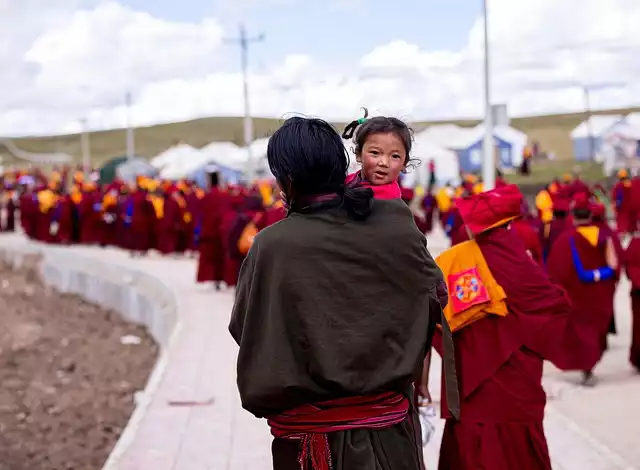
Tibet is one of the most fascinating and mysterious countries in all of Asia, not only because of the isolation that surrounds it with an impenetrable mystery, but also because it serves as a meeting point where the most influential cultures of Asia, such as India and China, have left deep and lasting marks that have shaped the intellectual, religious, and artistic development of its people. Tibet is one of the few places in the world where Tibetan Buddhism—especially the Great Vehicle—still thrives, protected by a powerful monastic organization, the largest known today. Despite some natural declines, these traditions of thought continue to flourish, nurtured under the influence of India’s Buddhist monasticism. Tibet is a vast country with an estimated population of 4-5 million people, though no census has been able to confirm this precisely. Lhasa, the sacred capital, is home to the Dalai Lama, the highest political and spiritual leader of Tibet. Currently, the 14th Dalai Lama holds the throne and is also the supreme authority of the Yellow Sect—one of the two main sects in Tibetan Buddhism. The Yellow Sect, founded in the 14th century, focuses on strict monastic discipline and a rigorous curriculum, emphasizing logic and dogmatics.
The 14th Dalai Lama is currently fifteen years old. Until he reaches the age of eighteen, a regent governs the country, assisted by a council of four ministers called “Sciapè.”
This unique governance system is based on a strict dichotomy: each office is shared between a lay official and a monastic official, ensuring that the two powers are intertwined and overseen by each other. Even at the provincial level, this dual governance structure prevails.
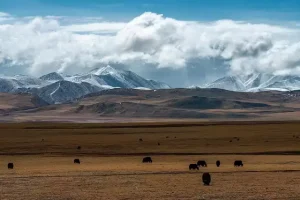
The isolation of Tibet, the complexity of its language, the intricacies of its religious beliefs, and the uniqueness of its symbolic art have all contributed to many misunderstandings about Tibet’s true nature, often misrepresenting a people who are both deeply religious and profoundly attached to material interests.
Tibetans hold the belief that the world is ultimately vanity and emptiness, yet they are not averse to achieving a level of material well-being that ensures a peaceful existence between birth and death.
Italy has made significant contributions to the exploration of Tibet. Although figures like Odoric of Pordenone and Marco Polo never entered Tibet, they were the first to report about it. Later, in the 18th century, Capuchins and Jesuits were able to stay in Tibet for several decades, leaving traces of their presence, such as a bell with a Latin inscription in Lhasa’s Lamaist cathedral.
The most lasting records of their explorations are found in their travel accounts, notably in the work of Ippolito Desideri, a Jesuit who translated and refuted a Tibetan thinker’s Summa Theologica, marking a remarkable intellectual encounter between Tibetan Buddhism and St. Thomas Aquinas.
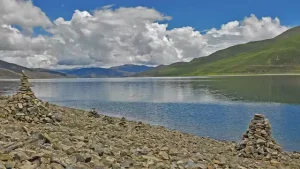
Despite Tibet’s efforts to remain closed, it continued to fascinate explorers. As a result, many of them focused on Tibet’s bordering regions. From Marquis Roero di Cortanze to Duke of Abruzzi, De Filippi, and Dainelli, Italians took part in expeditions to Karakoram and Ladakh, a Tibetan province with a Buddhist culture but politically under Kashmir. I was luckier than others, managing to cross the borders and, over several trips, became increasingly captivated by the scientific mystery of Tibet. Over the course of eight visits to various provinces, I focused on the ancient cultural and spiritual ties between Tibet and India. I began in Western Tibet, where I found temples that had survived time and human destruction, offering remarkable documents of the spiritual relationship between Tibet and India. I also visited sacred places such as Mount Kailash and Manasarovar Lake, which are central to both Buddhist and Hindu pilgrimages.
My research journey also took me to Sakya, the capital of Tibet during the reign of Kublai Khan, and Tashilunpo, the seat of one of the highest spiritual authorities in Tibet.
In 1947, at a time when a scientific expedition seemed almost impossible, I obtained permission from the Tibetan authorities to enter Lhasa and explore the region. With support from the Italian Geographical Society and the National Research Council, I organized an expedition that included my companions Regolo Moise, Piero Mele, and Fosco Maraini. While Moise served as the expedition’s medical officer and Mele as the photographer, Maraini was to document the journey on film. However, he was unable to continue past Yatung and returned to Italy.
The main goal of my 1948 Tibet expedition was to uncover historical documents that would shed light on Tibet’s ancient royal dynasties, spanning the 6th to 9th centuries. Additionally, I sought to investigate the origins of Tibetan culture and explore the pre-Buddhist indigenous religion, Bon, which shares many characteristics with Mongolian shamanism and predates Tibet’s conversion to Buddhism.
The research also focused on uncovering documents of Tibetan Buddhism, identifying the influence of Indian, Chinese, and Central Asian art on the development of Tibetan artistic traditions.
These efforts were part of my ongoing mission to study Tibetan literature, an endeavor I have already partially addressed in my book Tibetan Painted Scrolls, recently published by the State Polygraphic Institute. Tibetan literature, rich in commentaries, glosses, and exegeses, plays a crucial role in understanding the complex dogmatics of Buddhism. The study of the pre-Buddhist Bon religion also provided valuable insights into early Nestorian and Manichaean influences on Tibetan culture, shedding new light on Tibet’s spiritual and philosophical history.
As I traveled through Tibet, including significant sites such as Samye and Yarlung, I uncovered ancient manuscripts and chronicle records that had been preserved over centuries. Among the most valuable finds were documents that had never been studied before, containing works of poetry and philosophy that date back to the 3rd century.
I also studied the burial sites of ancient Tibetan kings and the monasteries that protected these sacred relics, offering further insight into the Tibetan spiritual and cultural heritage.
In conclusion, the Tibetan journey provided significant discoveries, helping to broaden the understanding of the region’s history, religion, and culture. However, this complex study has also highlighted the challenges of fully comprehending Tibetan civilization, which requires mastery of languages, philosophy, and the intricate web of religious and cultural influences that have shaped this unique society.